
7 Statistics Students Receive 2026 Hoopes Prize
We are thrilled to announce that the Department of Statistics has seven 2026 Hoopes Prize winners! The Hoopes Prize rewards excellence in the work of undergraduates and their capabilities and skills in any subject, projects of research in science or the humanities, or in specific written work of the students under the instruction or supervision of the faculty.
Congratulations to Adelina Andrei, Kevin Cong, Hans Elasri, Emma Finn, Sandhya Kumar, Arundhati Oommen, and Matthew Tan on receiving this honor!
We reached out to winners from the Statistics Department to hear more about the motivation behind their projects:
Adelina Andrei on her thesis entitled “Crossing the Cut: Approximation on Multiple Riemann Sheets”—supervised and nominated by Professor Nick Trefethen:
"Usually, functions we deal with are single-valued, as in they take one input and give one output. However, some important functions are multi-valued, as in they have one input and give many outputs depending not just on where you are, but on how you got there. Imagine a spiral parking garage, where after making one full loop, you're above the same ground point, but on a different floor. Standard approximation algorithms assume this never happens, so when applied to multi-valued functions, they only work on one "floor" at a time. My thesis asks whether you can build an approximation to such a function that works on multiple "floors" at once, using only data sampled from one, and introduces an algorithm that achieves this."
Kevin Cong on his work entitled “Sampling Schedules and Convergence: A Theoretical Framework for Diffusion Models”— supervised and nominated by Professor Sitan Chen:
"My thesis explores the theory behind a popular modern-day paradigm for generative modeling, diffusion, which has been the backbone of recent image and video generation models. Recently, these models have been applied to language generation, providing an alternative paradigm to standard LLMs. Motivated by this progress, we analyze the theory behind these models' inference schedules and convergence speeds."
Hans Elasri on his work entitled “Wisdom of the Quotes: Price Discovery on Kalshi”— supervised and nominated by Professor John Campbell:
"Prediction markets, which provide live probabilities of binary outcomes, sit at the intersection of Economics and Statistics—a perfect place to explore my interests in both fields. After learning that these prices are remarkably accurate, and with encouragement from my advisor Professor Campbell, I set out to understand how information actually enters prices: were traders or market makers doing more of the work? Finding that market makers account for the majority of price changes raises a deeper question: how are sophisticated market makers producing such accurate predictions so quickly?"
Emma Finn on her work entitled “Quantifying the Past: Empirical Tropes in Greek Historiography” —supervised and nominated by Professor Emily Greenwood:
"There is a reciprocal relationship between the ways we count, measure, and calculate and the ways in which we assign value. This thesis explores the origins of this relationship in the work of the ancient Greek historians Herodotus and Thucydides. Much like us, they lived during a period when developments in mathematical reasoning raised questions about what is worth measuring, how to argue that two objects are equal, and how to grapple with the contingency of these measurements. My thesis offers a novel close reading of the use of numbers in Herodotus and the use of probabilistic reasoning in Thucydides. By this close reading, I hope not only to show that questions around responsible use of data, which we might think of as peculiarly modern, have a much longer history than most people imagine, but also to argue that this long history is of enormous value to the project of answering the modern instantiations of these questions."
Sandhya Kumar on her work entitled “Enteric Neurons Rapidly Prime Systemic Immunity in Response to Mucosal Infection”—supervised and nominated by Dr. Ruaidhri Jackson:
"I examined a novel role for the enteric nervous system, a “second brain” comprising millions of neurons that innervate the gastrointestinal tract (GI), in regulating immunity beyond the gut. The enteric nervous system is responsible for a lot of normal GI activity, including things like regulating nutrient absorption and GI immunity, but there has been little work into how the enteric nervous system can help to regulate immunity outside of the gut. Understanding this pathway may provide broader insight into how the nervous and immune systems interact throughout the body and how these interactions may contribute to inflammatory and systemic diseases."
Arundhati Oommen on her work entitled “When Luck Becomes the Arbiter: Responsibility, Risk, and the Limits of Outcome-Based Judgment”—supervised and nominated by Professor Edward Hall and Professor Xiao-Li Meng:
"The philosophy of moral luck exposes a fundamental tension in how we assign blame: we simultaneously believe people should only be responsible for what they controlled, and yet we consistently judge them based on outcomes that luck delivers. This thesis uses causal inference methods on national crash data to measure the excess fatal risk a drunk driver imposes on others, a risk that varies meaningfully across driving contexts, and represents responsibility as a credal interval that honestly accounts for uncertainty. The central result is that even the most conservative lower bound is strictly positive everywhere: what we owe each other is not the mercy of lucky outcomes, but discipline at the moment of choice."
Matthew Tan on his work entitled “All Those Moments Will Be Lost: Two Paths to Edge Universality of Random Matrices”—supervised and nominated by Dr. Kevin Yang:
"My thesis was motivated by a question at the heart of random matrix theory: why do large, complicated random systems often exhibit the same universal statistical laws, even when their microscopic details are very different? I studied this question at the spectral edge, where the largest eigenvalues live, using probabilistic estimates, combinatorial trace and moment methods, and comparisons between classical Wigner matrices and random band matrices that retain geometry and locality. The project examines how universal Tracy–Widom/Airy behavior emerges, and how that behavior changes when the underlying spatial structure of the model remains visible."

Adelina Andrei

Kevin Cong

Hans Elasri

Emma Finn

Sandhya Kumar
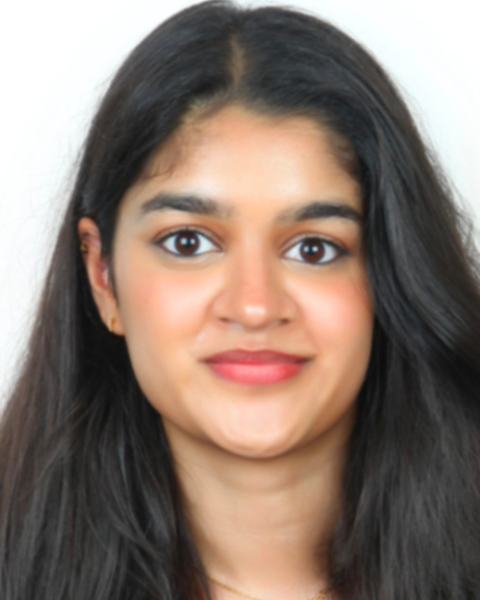
Arundhati Oommen

Matthew Tan